The Complete Guide to Background Checks: Legality, Scope, Cost & How to Choose an Investigation Agency
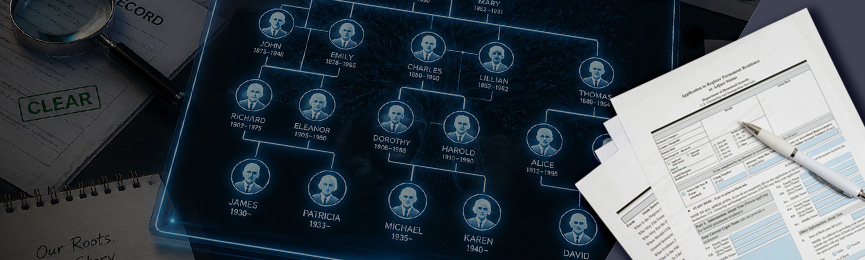
The term "background check" might sound like something distant and formal, but in reality, it could be happening right around you. Someone preparing to get married wants to confirm their partner has no undisclosed marriage history; a business owner hiring for a key position wants to verify a candidate's education and work experience are genuine; an investor about to buy into a company wants to know whether their prospective partner has any history of litigation. These scenarios may look different on the surface, but they all point to the same underlying need: getting the facts straight before making a major decision.
Many people still have reservations about background checks, and the questions that come up most often are: Is this even legal? Could it invade someone's privacy? Is the information gathered actually useful? And how are the fees calculated? This article starts with the definition and legal basis of background checks, then walks you through their concrete applications in relationships, finances, criminal records, and commercial hiring — explaining exactly what can be found, how cost and time are estimated, and finally how to tell a lawful investigation agency from an unlawful one, so you have a clear map in mind before taking the step of commissioning an investigation.
What Is a Background Check, and Why Are More People Turning to It?
Put simply, a background check is a lawful, systematic way of verifying the true past and present circumstances of a person or company — covering aspects such as identity, education, work history, financial standing, criminal record, marital status, and even social behavior and relationships. It's not simple "asking around" — it's a methodical, evidence-based process of gathering information that can be cross-verified.
Background checks used to be associated mainly with traditional scenarios like pre-marital investigations or commercial credit checks. But with the spread of social media, more frequent cross-border interaction, and the growing difficulty of telling truth from fiction online, more and more people are realizing that whether it's a relationship, a hiring decision, or a business partnership, the other party's word alone usually isn't enough to support a decision that could affect your life or your finances. This is the core value a background check provides — not suspicion, but a factual foundation that makes a decision better grounded.
What Is the Legal Basis for Background Checks in Hong Kong?
In Hong Kong, the legality of background checks is primarily governed by the framework of the Personal Data (Privacy) Ordinance. This ordinance focuses on how data is collected, the purpose for which it's used, and how it's retained — not on banning fact-checking outright. In other words, as long as the investigative methods used are lawful — such as consulting public records, publicly available court documents, or information obtained with consent — and the data gathered is used only for the reasonable purpose the client has stated (such as a pre-marital decision or employment screening), this type of background check is a lawful service.
It's worth noting that the legal line is drawn at "method" and "purpose," not at "what is being checked." Information obtained through unlawful means — such as unauthorized access to someone's communication devices, wiretapping, or stalking and harassment — remains unlawful in process, even if the information turns out to be accurate. This is exactly why choosing a lawful, compliant investigation agency matters more than the result itself: clients don't just want an answer, they need an investigative process that holds up, and that won't end up putting them at legal risk instead.
Common Types of Background Checks: Five Common Applications
A background check isn't a single, one-size-fits-all service — it branches into different applications depending on the client's situation and needs. Lida has organized the five most common types below, so you can quickly identify which category matches what you're currently facing:
| Relationship & Marriage-Related | The most common entry point into background checks. Whether you're about to get married and want to confirm your fiancé(e)'s marital history, or you've recently met someone on a dating app and want to verify their identity and relationship status first, the core goal of this type of check is to confirm the other person really is who they claim to be, before you invest your emotions or make a marital commitment. |
|---|---|
| Financial & Credit Checks | This type focuses on the financial health of a person or company — for example, whether there's a history of bankruptcy filings, long-overdue debts, or a poor credit rating. This information plays a key role in pre-marital financial planning, evaluating a business partnership, or even lending decisions. |
| Criminal Record & Adverse History Checks | Primarily checks whether the subject has a criminal record, court litigation history, or other adverse conduct records in Hong Kong or mainland China. This information holds high reference value for marriage decisions, employment screening, and assessing the character of a business partner — yet it's also the aspect the other party is least likely to volunteer on their own. |
| Commercial & Employment Checks | Covers employee background screening when a company hires for key positions, as well as due diligence on suppliers or investment targets before a business partnership. This type of check usually focuses on the authenticity of education and work history, financial integrity, and any past involvement in commercial disputes. |
| Missing Person & Lost Contact Cases | A less commonly mentioned but equally common need — for example, locating a family member or friend who has been out of contact for years, confirming a debtor's whereabouts, or helping locate a missing family member in the context of a family dispute. |
What Kinds of Investigative Services Involve a Background Check? Lida's Full Scope of Items
Different types of background checks focus on different items to verify, but they can generally be grouped into the following core areas:
| Marriage Record Verification | Confirming a subject's marriage registration status in Hong Kong and mainland China through lawful channels, checking for a concealed marriage, bigamy, or an undisclosed divorce record. |
|---|---|
| Relationship Status & Fidelity Investigation | Confirming, through surveillance and social network analysis, whether a subject is maintaining more than one relationship at the same time. |
| Financial & Credit Checks | Focusing on bankruptcy records, debt levels, and credit ratings, helping clients assess the other party's financial integrity and the financial risk of a marriage or partnership. |
| Criminal Record & Adverse History Checks | Verifying whether a subject has a criminal record or court litigation history — an aspect that can't be overlooked in either a marriage decision or a business partnership. |
| Education & Employment Verification | Verifying the authenticity of a subject's stated qualifications, professional credentials, and job title, guarding against romance scams or résumé fraud built on a fabricated identity. |
| Family Background & Relationship Assessment | Understanding a subject's family composition and circle of relatives and friends, along with any potential hereditary health risks — information given particular weight in pre-marital investigations. |
| Personal Character & Lifestyle Assessment | Through information gathering and observation from multiple sources, understanding a subject's daily routine, social behavior patterns, and any problematic habits such as gambling or heavy drinking — the aspect closest to everyday life in building a full picture of who someone really is. |
How Are Background Check Fees and Turnaround Time Calculated?
There's no universal price list for background checks — the cost depends mainly on the scope of the investigation, its complexity, and the time and resources required. Basic checks, such as simply verifying a marriage record, criminal history, or educational qualifications, usually follow a fairly clear data-verification path, so fees tend to be lower and can typically be completed within a few working days.
More advanced investigations involve more variables — such as an in-depth check into financial assets, a fidelity assessment, or a movement investigation requiring on-the-ground surveillance and evidence gathering. These types of investigations generally require more manpower and time, and the fees rise accordingly. If the case involves cross-border work between Hong Kong and mainland China — for example, needing to verify records in both jurisdictions at once — the additional time and resource costs also need to be factored in.
Lida would like to remind everyone here that a lawful, compliant investigation agency should clearly explain all fee items before a case is commissioned — there should be no vague or hidden charges. Clients can choose a suitable investigation plan based on their actual needs and budget, and any questions about the quote should be fully clarified before commissioning, rather than discovering unexpected costs after the fact.
How to Tell a Lawful Investigation Agency from an Unlawful One: 6 Key Checkpoints
The market is full of investigation agencies, but service quality and compliance vary widely. The following checkpoints can help you form an initial judgment on whether an agency is trustworthy before commissioning:
First, does it have a clear, transparent fee structure, providing a definite quote before commissioning rather than adding unclear charges afterward?
Second, does it sign a formal confidentiality agreement, clearly setting out its responsibilities for protecting case data, the investigative process, and the final report?
Third, are its investigative methods lawful and compliant — for instance, do they avoid illegal wiretapping or unauthorized access to communication devices? Even if such methods obtain information, they also leave the client exposed to legal risk.
Fourth, does the team have professional training and hands-on experience, offering advice tailored to different types of cases rather than applying the same script to every situation?
Fifth, does it hold internationally or industry-recognized professional membership — for example, membership in the World Association of Detectives — the kind of credential that generally reflects a degree of external oversight and recognition of the agency's professional conduct and service standards?
Sixth, does it offer a free initial consultation, giving clients the chance to understand the investigative approach and process before formally signing, rather than having to make a rushed decision with incomplete information?
These are the key criteria clients can use to identify a genuinely lawful and reliable investigation agency among the many options on the market.
The Process & Protections When Commissioning Lida International Investigation Agency
Lida International Investigation Agency is a key member of the World Association of Detectives, with a team spanning Hong Kong and mainland China and decades of combined hands-on investigative experience, able to handle everything from pre-marital checks and movement investigations to corporate background reviews.
Our process is clear and transparent. The first step is a free initial consultation — clients can reach us by phone or direct message, where a professional consultant will understand the case and needs, with no need to provide excessive personal information at this stage. Once the engagement is confirmed, both parties sign a confidentiality agreement, and all case data, the investigative process, and the final report are protected under a strict confidentiality system. Throughout the investigation, everything is carried out lawfully and discreetly, with the target unaware that anything unusual is taking place. Once the investigation is complete, the client receives a detailed written report, which the consultant walks them through personally, helping the client understand the meaning behind each finding.
"Getting the Facts Straight" Is Really About Taking Responsibility for Your Own Life Decisions
Whether you're about to get married, hiring for an important position, or evaluating a business partnership, the core value of a background check was never about satisfying suspicion — it's about making sure that when you make a major decision in your life or career, you have enough genuine information in hand. Getting the facts straight doesn't mean a lack of trust; it's the most basic, most responsible attitude you can take toward yourself, the relationship, or the decision at hand.
If you're currently uncertain about a relationship, a job candidate, or a potential partnership, consider starting with a free initial consultation to find the investigative approach that suits your situation — so your decision is built on facts, not guesswork and unease.
Want to Know More? 5 Things You'll Want to Know Before Commissioning
| Q1: Is a background check legal? What information can a private investigator actually find? |
|---|
| Yes, absolutely — as long as the investigation is carried out in accordance with Hong Kong's Personal Data (Privacy) Ordinance, a background check is a lawful service. The scope typically covers marriage records, criminal history, financial and credit standing, education verification, and relationship fidelity. However, even if information obtained through unlawful methods turns out to be accurate, the process itself remains illegal. |
| Q2: How much does a background check typically cost, and how long does it take? |
|---|
| The cost depends on the scope and complexity of the investigation. Basic checks (such as marriage records or education verification) are usually completed within a few working days and cost relatively little; more comprehensive investigations involving financial assets, surveillance, or cross-border work take longer and cost more accordingly. It's best to contact an investigation agency directly for a free consultation and get a transparent quote tailored to your case. |
| Q3: If I commission a background check, will the other person find out they're being investigated? |
|---|
| No. As a lawful investigation agency, we carry out the entire investigation confidentially and discreetly, in accordance with the law — the target will typically not notice anything unusual. Once you sign a confidentiality agreement with the agency, your case details and report content will not be disclosed to anyone else either. |
| Q4: I don't have any concrete evidence — I just have a feeling something's wrong. Can I still commission an investigation? |
|---|
| Of course. Commissioning a background check doesn't require you to provide evidence upfront — you only need to give basic information about the subject, and a professional consultant will design a suitable investigative direction based on your concerns and situation. That gut feeling of unease is often, in practice, the most legitimate reason to start an investigation. |
| Q5: How can I tell if an investigation agency is lawful and reliable? |
|---|
| Look at it from a few angles: is the pricing transparent, is a confidentiality agreement signed, are the investigative methods lawful and compliant, does the team have professional training and hands-on experience, does it hold internationally or industry-recognized membership, and does it offer a free initial consultation? An agency that meets these criteria is generally more likely to provide a lawful, trustworthy service. |